

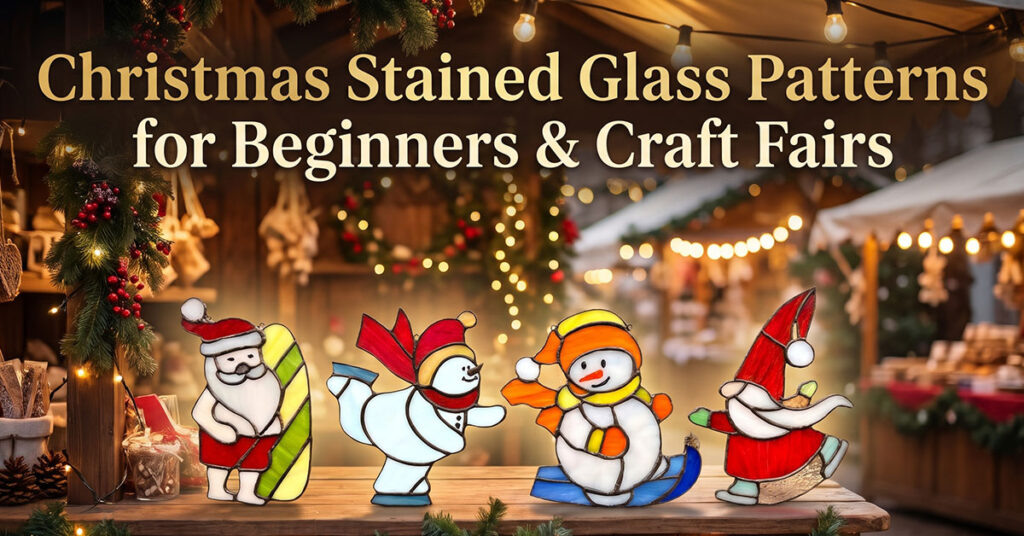
Christmas Stained Glass Patterns for Beginners & Craft Fairs
If you already hang a flat stained glass panel in your window, a Christmas stained glass pattern for beginners is the smallest possible next step: the same cutting, foiling and soldering, but on a piece small enough to finish before the holidays and to sell at a craft fair table.
The seasonal window is short. Etsy search data compiled by RankHero puts “stained glass christmas” at roughly 1,900 searches a month in November and December against 50–90 in summer, so makers start looking for patterns in early November — and a project you buy in December often misses the gift it was meant for.
Key Takeaways
- Start with a flat ornament pattern of 15–40 pieces of glass, not a 3D house.
- Print the pattern at the exact size you intend to build — most beginner problems start at the printer, not at the soldering iron.
- Copper foil is the method behind almost every Christmas pattern you will find: cut, foil, solder, assemble.
- Small motifs — snowman, gnome, tree, Santa — are what craft-fair buyers pick up and turn over in their hands.
- Paid patterns include a commercial license; if you sell finished pieces, that clause is the difference between a gift and a product.
- Free patterns are for learning; paid patterns are for a consistent set you can sell.
Which Christmas stained glass pattern should a beginner start with?
Start with a flat ornament pattern in the 15–40 piece range. A snowman, a gnome or a simple tree teaches every joint you need — the same cuts a larger panel uses, just in a smaller budget of glass, so a mistake costs a scrap instead of a sheet.
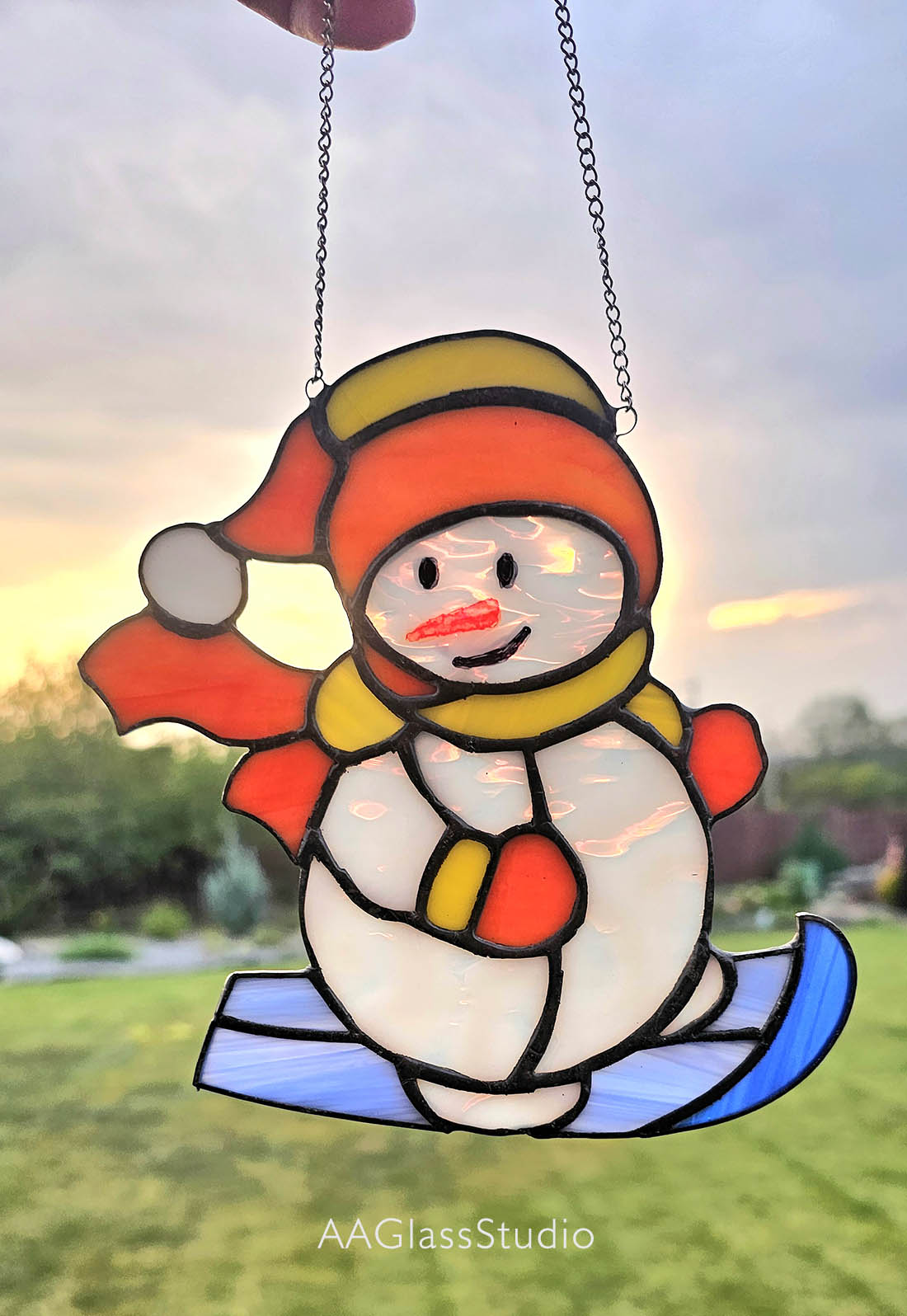
For scale: our stained glass snowman ornament pattern is 17 pieces of glass at 4.7 by 4.2 inches — a first project that fits in an evening of cutting. When that feels comfortable, step up to a beginners’ pattern set where the same motif repeats at slightly different sizes.
Save the three-dimensional builds for later. A 3D Christmas village house or a hobbit house runs to 53 pieces and has to stand up as well as glow — wonderful projects, wrong first steps.
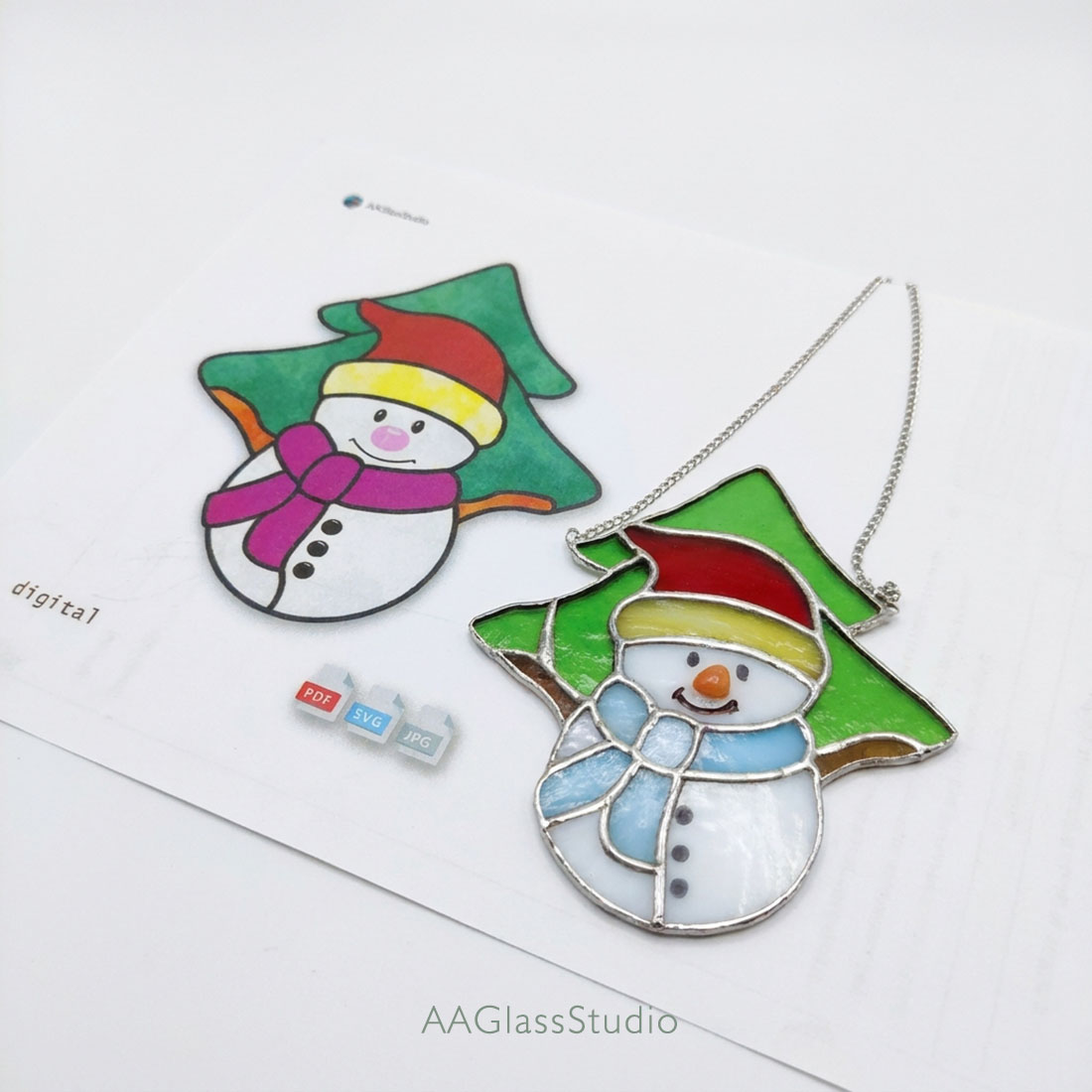
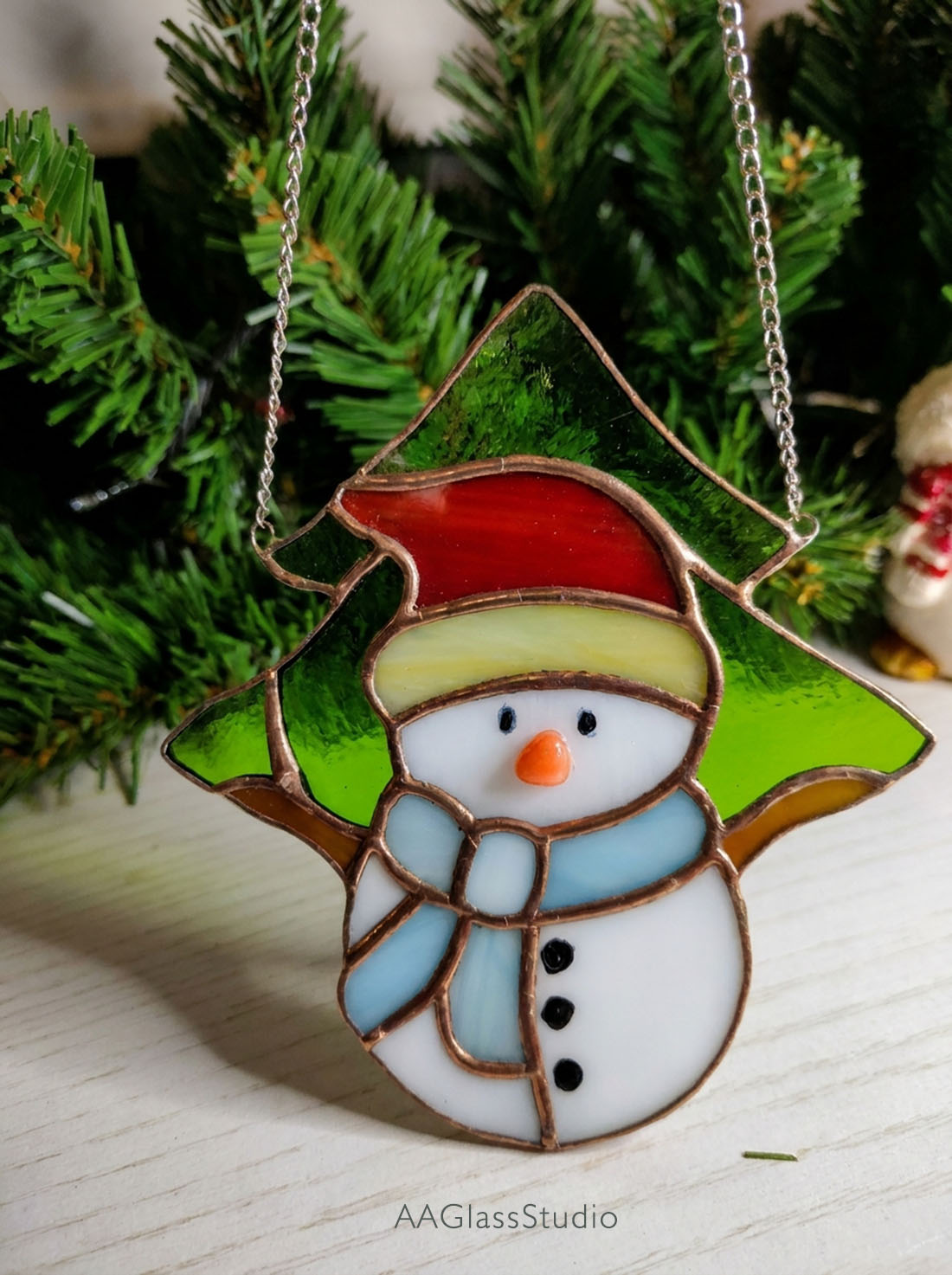
The same winter ornament in two states: a Christmas stained glass pattern for beginners, printed as a sheet on the left, and the soldered snowman ornament on the right.
Three snowman patterns from our shop that fit that first evening of cutting:


What do you need to make a Christmas stained glass pattern?
The copper foil method needs five things: stained glass, the printed pattern, copper foil, solder and the tools to cut and join — a cutter, a grinder, a soldering iron. Nothing about Christmas changes that list; only the motif does.
Two details save most first projects. Print the pattern at the size you intend to build (see the next section), and read the pattern’s piece count before buying glass: 17 pieces and 53 pieces are different shopping lists. Formats, licensing and printing questions are answered once on our stained glass patterns FAQ page.
Which glass colours make a pattern read as Christmas?
Red, green, amber and a clear or white for the highlights: that combination is what makes an ornament recognizable as Christmas before anyone reads the label. Keep the lead lines dark and the background quiet — a busy colour scheme costs you the shape of the piece at two feet, which is exactly the distance a craft-fair buyer stands from your table.
You do not need a full sheet of every colour for a first project. An ornament of 17 pieces usually draws from three or four colours, so a scrap box from earlier projects often covers the whole pattern before you buy anything new.
How do you print a pattern at the right size?
Print it at 100% scale on US Letter or A4, with “fit to page” switched off. If the design has to fit a specific object — a wine glass shade, a 4-inch ornament — use our free pattern resizer to scale the image before printing, then check the printed ruler line against a tape measure.
A pattern printed at the wrong scale is the most common reason a first Christmas ornament does not close: the pieces are cut accurately to a design that is simply the wrong size.
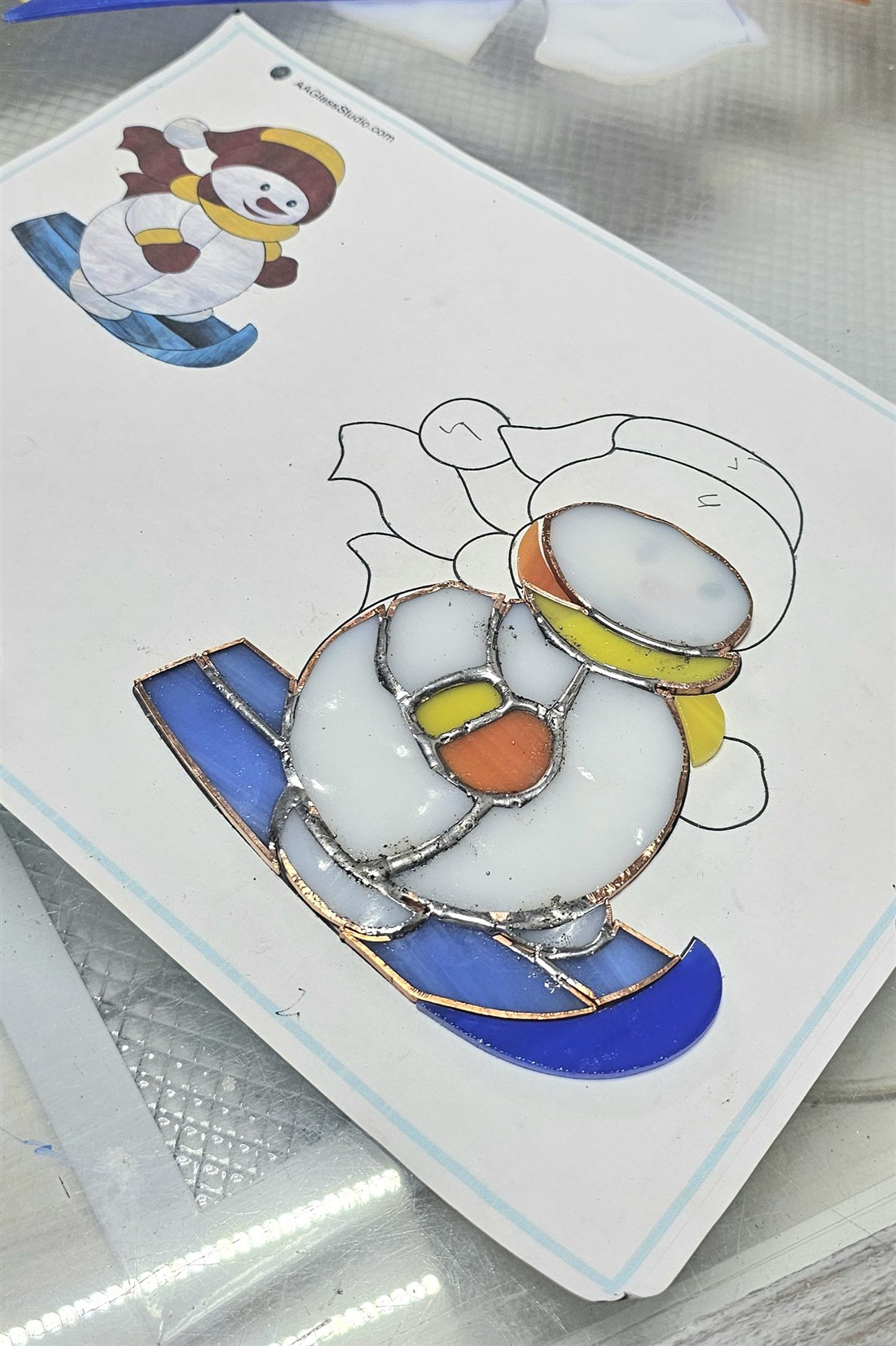
On the left, the pattern printed at full size with the cut pieces laid on the drawing — the check that catches a wrong scale before the soldering iron, with the finished piece on the right.
Which designs sell best at craft fairs?
The motifs buyers recognize without a sign: snowman, gnome, Santa, tree, ornament. Craft-fair sellers in the StainedGlass community on Reddit describe the same short list every season — small ornaments, small angels, little trees, all the pieces a buyer can carry home in one hand.
Sets sell better than singles on a table, because a visitor who buys one ornament usually buys three: our three-design Christmas ornament set is built for exactly that. For a booth with a story behind it, the Christmas train and the Christmas gnome are the pieces people photograph first.
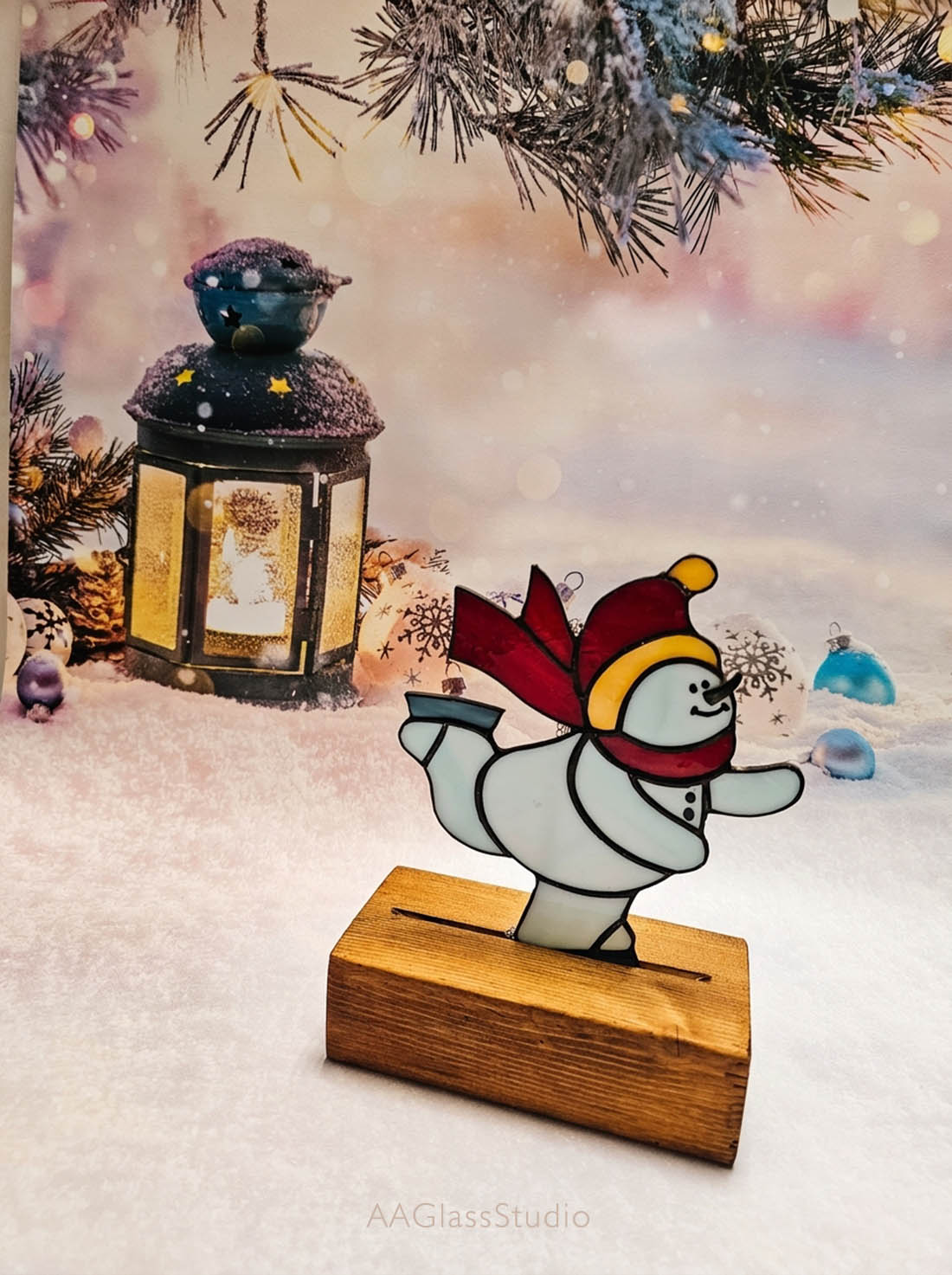
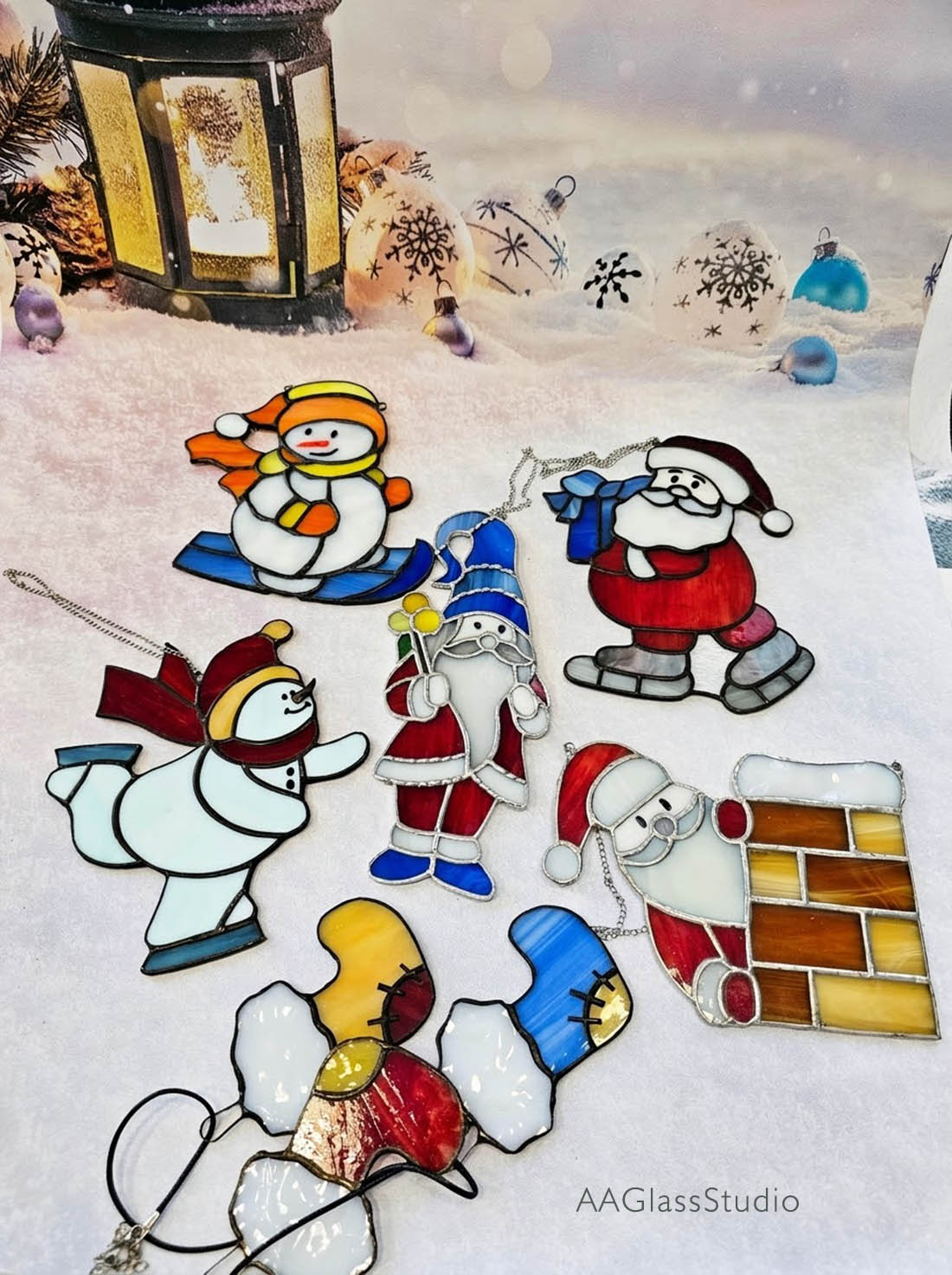
A craft-fair table built from the same small patterns: snowmen, Santas and stockings in one colour story.
Three patterns that cover a table quickly — a 26-piece snowman tree topper, a Santa ornament in sunglasses and a nostalgic Santa panel:


Christmas Stained Glass Patterns
Magical Santa Stained Glass Pattern – Nostalgic Holiday Charm


Browse the whole 2015 Santa Claus collection
If you would rather buy a series than a single piece, the 2015 Santa Claus collection is the shortest route: every design is a flat copper-foil pattern in printable PDF and SVG, and each one carries the same commercial license as the snowmen above.


Christmas Stained Glass Patterns


Stained Glass Santa Patterns


Want the full shelf instead of the Christmas picks? See all Santa stained glass patterns.
Free or paid Christmas stained glass patterns — which should you use?
Use free patterns to learn the method: our free Christmas patterns page collects beginner designs you can download and print today, and the free pattern library covers the rest of the year.
Move to paid patterns when the piece leaves your house. Paid patterns from our Christmas collection ship with a commercial license — the clause that lets you sell the finished ornament you soldered — plus consistent sizing and formats across the set, which is what a repeatable craft-fair product needs.
Common beginner mistakes
- Printing without checking the scale. “Fit to page” silently changes dimensions; measure the printed design before cutting.
- Starting with a 3D build. Flat first: a panel or an ornament teaches the joints without teaching them twice.
- Skipping the piece count. Check how many pieces a pattern has before you plan the project weekend — it decides the shopping list and the time.
Start with one small piece
If a Christmas stained glass pattern for beginners is what you came for, pick a single flat ornament this week: print it at size, cut it, foil it, solder it. If the process clicks, the free Christmas patterns and the paid collection are one link apart — and there is still time before December to finish something you can gift or sell.
Download a free Christmas stained glass pattern or browse the full Christmas stained glass pattern collection.